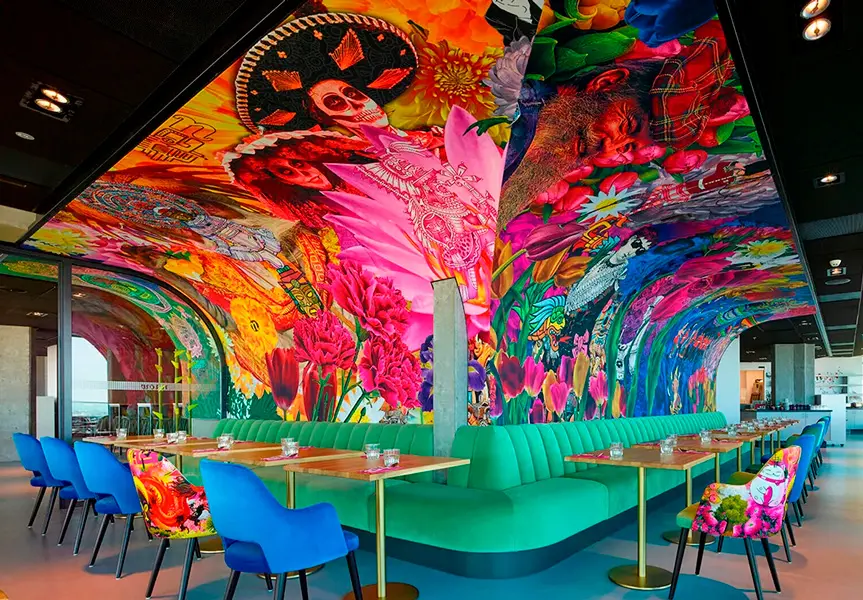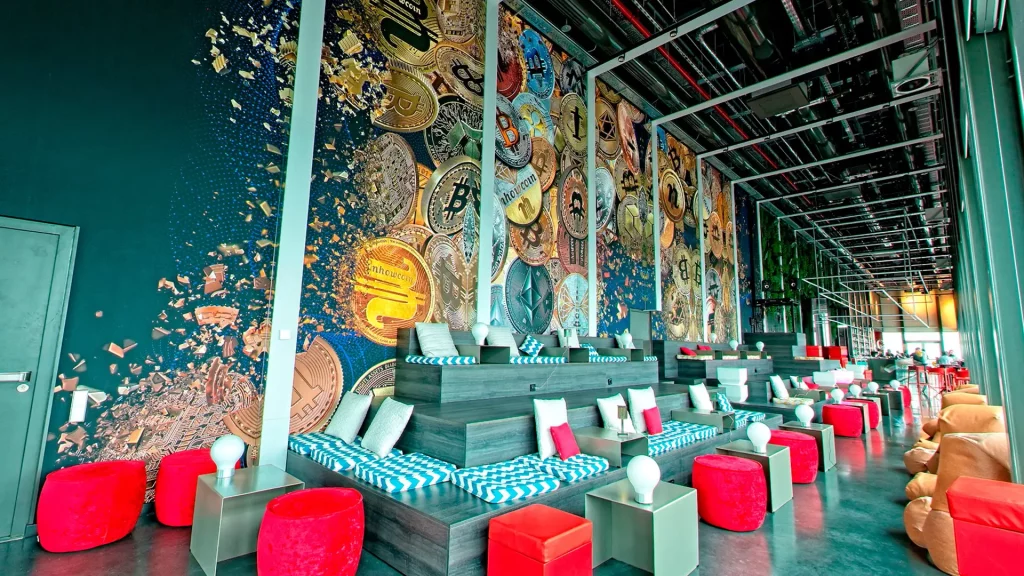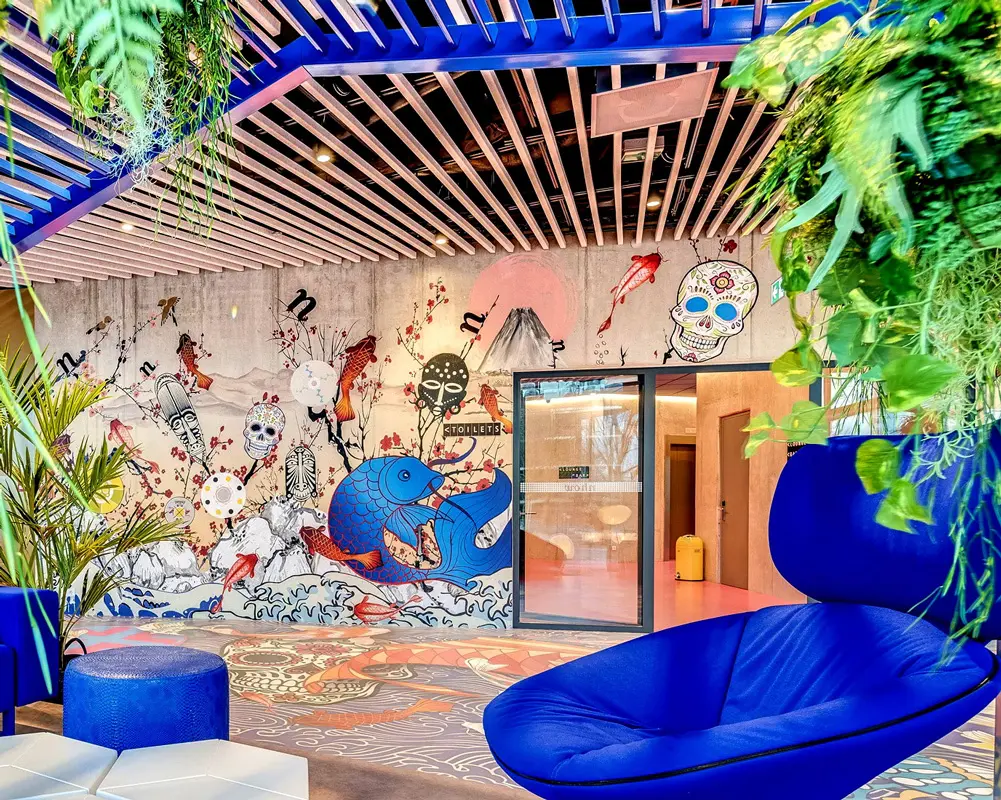
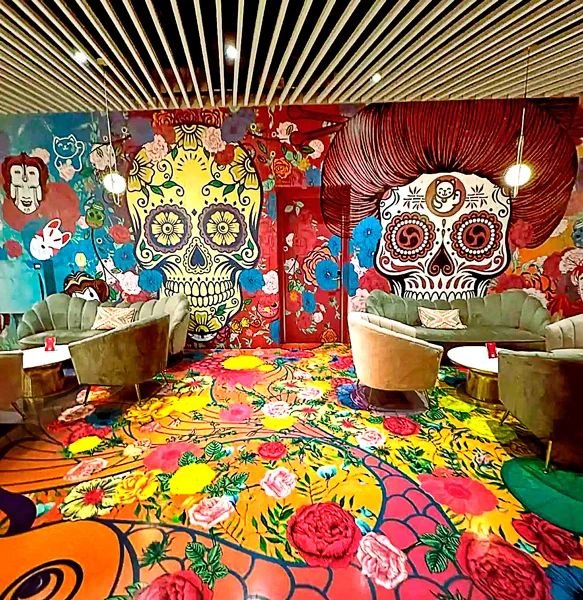
“Visual Storytelling for Spaces” is a term I have coined, as a pioneer of this discipline, to define a creative intervention in a space that cannot be explained simply as an art installation or a decorative solution. It is about translating a narrative into a physical environment by creating an enveloping visual experience, such that whoever visits feels that, while they remain there, they are an active part of the proposal. In a way, it translates the interaction between fantasy and reality—which we have lost in the digital world—to a real-world context.
Visual Storytelling starts from a key concept but develops through nuances, allegories, and symbolism. Depending on each project, the journey may be more complex or more minimalist, but one essence always remains: the transmission of a narrative, the stimulus provoked by how it is transmitted (turning the visitor into a participant rather than just a spectator), and the generation of emotions through an evocative non-verbal language.
This discipline is governed by five fundamental principles:
Narrative as Origin: The story is the starting point, not an aesthetic add-on.
Immersion by Design: The goal is to envelop the individual sensorially and emotionally.
From Spectator to Protagonist: The design for spaces invites interaction, making the visitor feel like the main character.
Strategic Brand Alignment: The visual narrative is the physical embodiment of the brand’s values and objectives.
Tangible ROI: Success is measured in both beauty and business results.
The versatility of this discipline allows for generating value across a wide range of sectors, addressing their specific challenges:
Hospitality: In a market where rooms are compared by price on online portals, spatial storytelling creates a guest experience so unique that the hotel becomes the destination itself. It justifies premium rates and encourages direct bookings.
Retail: Transforms a store from a place of transaction to a stage for experiences. It attracts customers back to the physical space, increases dwell time, and forges a loyalty that e-commerce cannot replicate.
Corporate Spaces: Turns the office into the physical manifestation of the company’s culture and mission. It becomes a powerful tool to attract and retain talent and to inspire the teams working within it.
Dining and Nightlife: Elevates a venue above the competition by offering an enveloping atmosphere and a sensory narrative that turns a simple meal or drink into an experience worthy of being shared.
Events: Goes beyond traditional thematic decoration to create genuine scenarios that transmit a deep message and leave a lasting impression on attendees.
Dedicating unlimited economic resources to a digital world that has collapsed does not seem like the best strategy to follow. Instead, pioneering a trend that is conquering all consumer segments can provide a strategic advantage over the competition. It demonstrates that there is indeed something new to offer—that stimuli have not ended due to the saturation of social media and intrusive advertising—because there is an alternative.
I believe the concept of Visual Storytelling for Spaces as an innovative resource for a market in need of reinvention will spread as quickly as its dissemination reaches the different sectors not yet familiar with it. This is not a marketing strategy or an invention to sell a service; there is real, tangible value behind this proposal. There is a track record, and there is a future.
FAQ: Frequently Asked Questions about Visual Storytelling for Spaces
Is this only for luxury brands?
No. It is for any brand or company that values emotional connection with its audience and seeks meaningful differentiation. The approach is premium, but the principle is universal.
How is the ROI of such an intervention measured?
ROI is measured through a combination of metrics: in retail, it can be increased traffic and dwell time; in hospitality design, an increase in direct bookings and RevPAR; in offices, improvement in employee satisfaction surveys and talent retention rates. Additionally, earned media value is measured through organic content generated on social media.
What is the difference from an art installation?
An art installation can be an end in itself. A Visual Spatial Storytelling intervention is intrinsically linked to a brand’s strategic objectives. It is art with a clear commercial and communicative purpose.