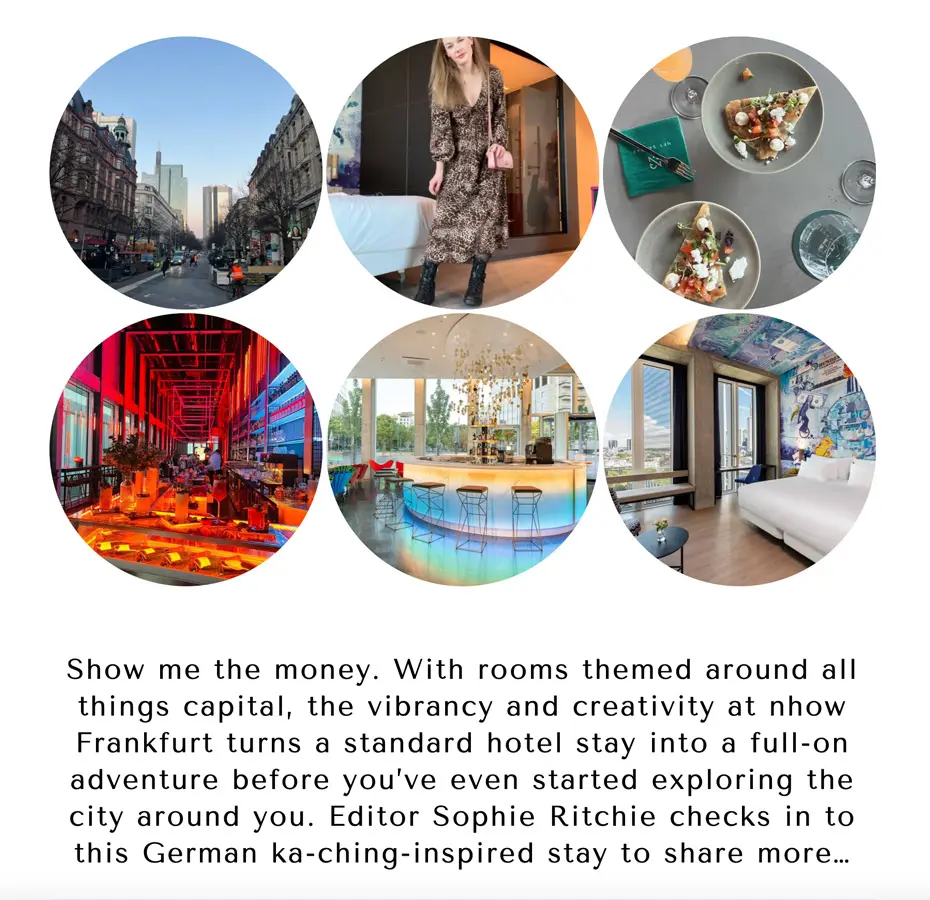
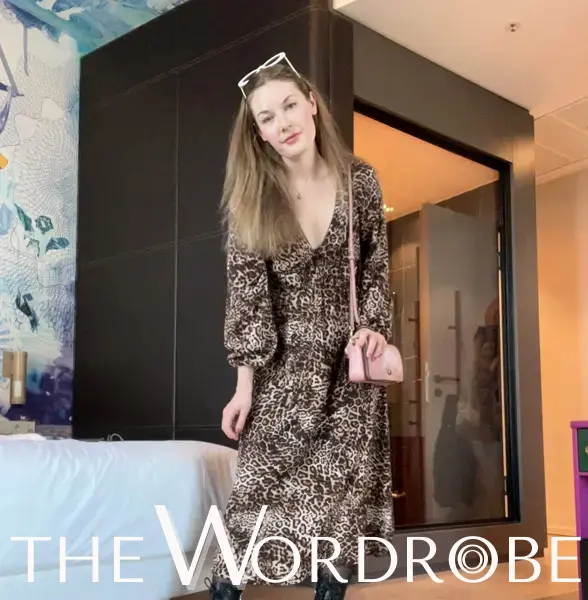
The hospitality art I have been executing for the past seven years continues to generate echoes in the press. This time, the international magazine The Wordrobe has published a feature on the nhow Frankfurt hotel, in which journalist Sophie Ritchie takes a complete tour of its facilities.
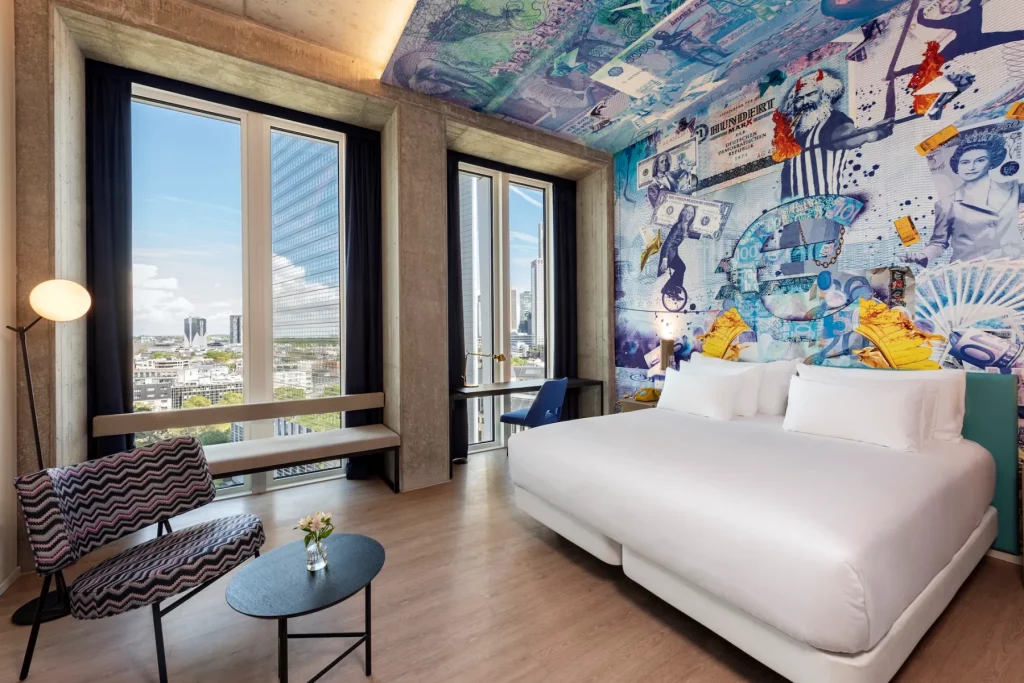
I had the opportunity to speak with Ritchie following the international press presentation of my NFT art project, “Daydream Trip,” at the NFT SkyBar in Frankfurt. It was an informal interview where we discussed the inspiration behind the 10 “dreams” created for the digital art series. Above all, we exchanged impressions regarding the art I created for the hotel guest rooms. She was staying in one of these rooms and shared her perception of how the artwork covering the walls and ceiling generated the sensation of feeling immersed in the piece—of becoming part of the dreamlike and surreal world underlying those works.
The perception of my work at the nhow Frankfurt as an immersive experience is one of the project’s greatest achievements. My intention when creating it was to make the visitor an active participant, breaking the glass wall that typically exists between art and spectator.
The art for spaces that I develop—art that fuses with interior design to dilute the visual boundaries between the two—transcends aesthetics and decoration, becoming an immersive sensory experience. This is what differentiates my work as a spatial artist from what has been done until now in the world of hospitality.
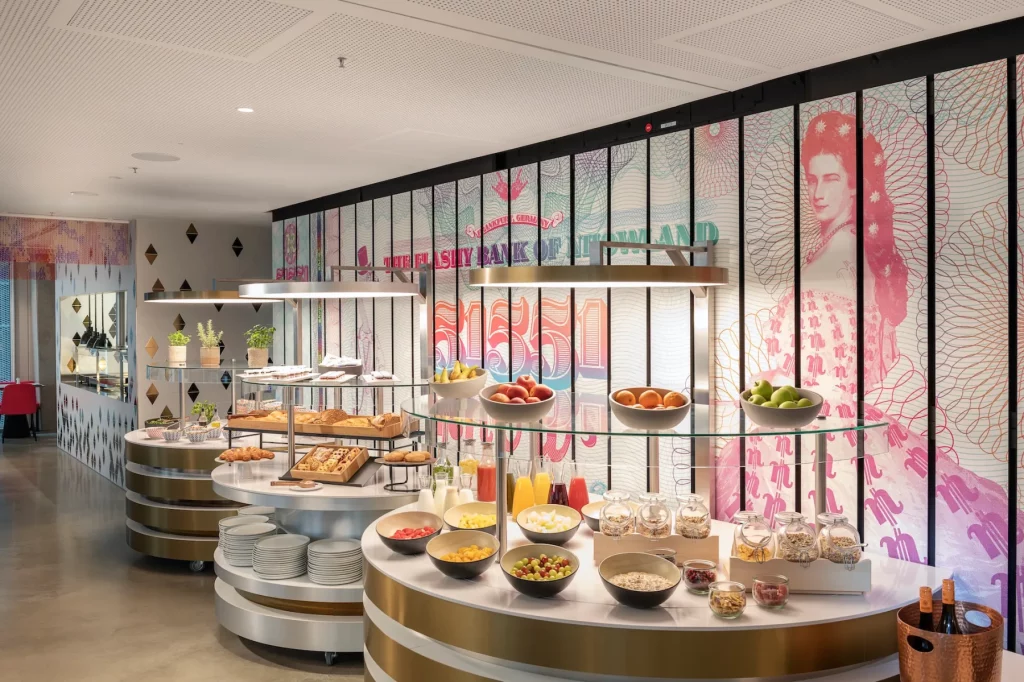
In her report, Sophie Ritchie covers various aspects of the hotel, such as its relationship with the city of Frankfurt, its architecture, and its interior design. Halfway through the text, she focuses her attention on my artistic work, mentioning the fierce critique of capitalism underlying the compositions’ meaning. This critique is not particularly subtle: the recreations of characters featured on the banknotes of the capitalist system’s major currencies are transformed into performers in a circus—”The Money Circus”—vindicating the farce behind the self-interested and tricky use of value, capital reserves, and resources.
From Karl Marx with devil horns performing a balancing act with fire, to the Queen of England juggling gold bars, the compositions for the three standard room typologies—each starring one of the international market’s major currencies (Dollar, Euro, British Pound)—showcase a fictional circus ring where different banknotes come to life through their central characters.
In my conversation with Ritchie that afternoon, amidst cocktails and NFT art at the SkyBar, we exchanged feedback and visions regarding my artistic proposal for these rooms. In her report, she shares some conclusions drawn from the emotional and experiential impressions perceived during her stay as a guest in one of the Euro-currency-themed rooms.
Hospitality design is experiencing an unprecedented revolution driven by new generations (Millennials, Gen-Z) who are no longer satisfied with being simple spectators. They demand to be protagonists of a real experience where art, space, and individual interact, creating creative dynamics that expand and reinvent the original spatial storytelling of the hotel.
READ THE FULL ARTICLE BY CLICKING HERE