From Brand Guidelines to Storytelling: How Hotel Branding Evolved Into Experiential Narrative
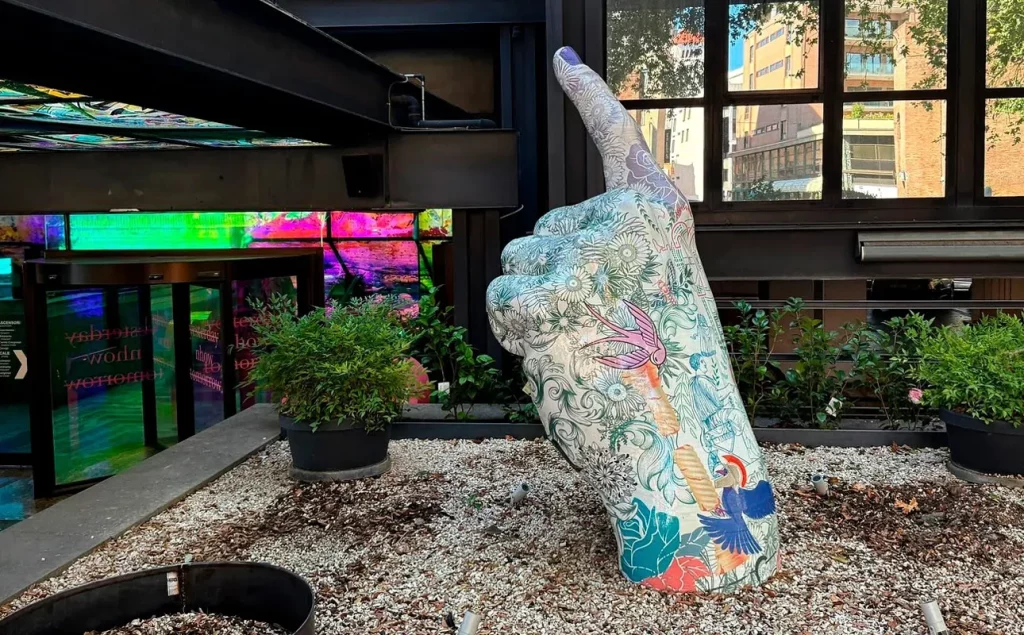
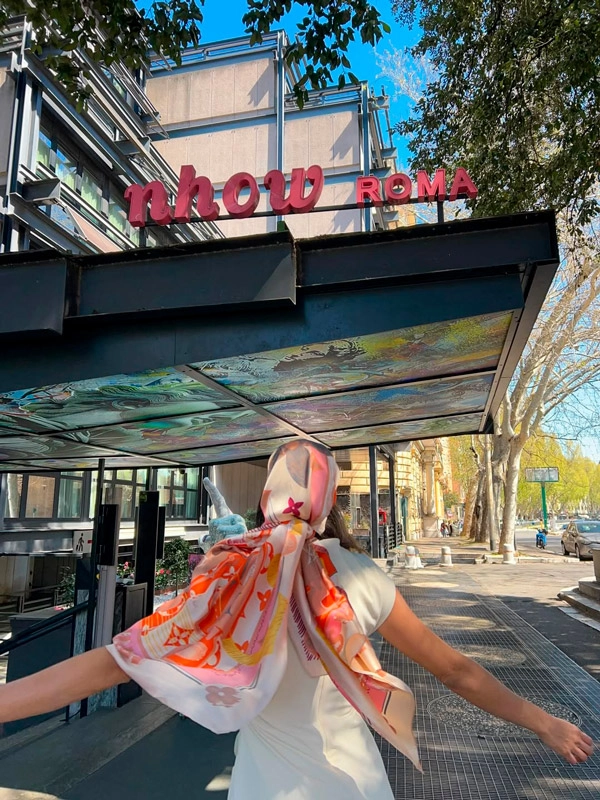
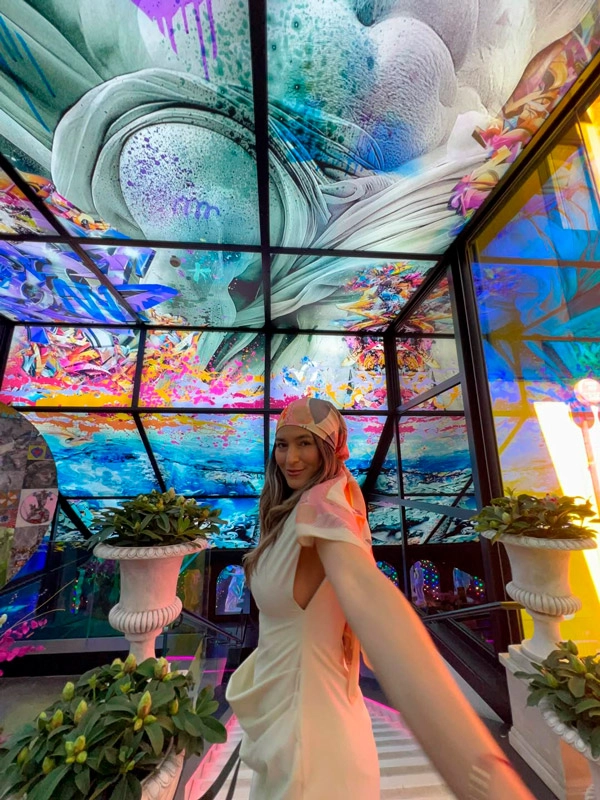
As you approach the entrance of nhow Rome, a large statue of a hand points toward the hotel’s front door. Classical Roman in style, the monument is completely covered in tattoos evoking the visual imagery of imperial Rome. The journey into the lobby continues beneath a backlit ceiling where statues of Roman mythological gods dissolve into graffiti and urban art. The concept of a journey through the eras of Rome — the hotel’s core identity — is conveyed through visual codes that require no further explanation. Experiential design is the branding.
The Old Model: Branding as a System of Rules
Branding in the hospitality sector has traditionally been confined to a rigid structure: a brand manual with a set of guidelines defining how the hotel’s corporate identity should be applied across different formats and contexts with visual consistency. A primary and secondary colour palette, typefaces, logo versions, templates for commercial and corporate communications. Resources that guaranteed technical coherence, yes — but that conveyed no emotion to the guest, who was reduced to a passive receiver of brand messages.
Branding is the foundation upon which a hotel’s identity is built and what it communicates to its guests. Without storytelling, what remains is a corporate identity with no voice and no personality of its own: a brand identity without a brand narrative.
The Turning Point: When Experience Became the Product
The world changes. The consumer changes. The guest changes. A revolution was quietly taking shape throughout the previous decade, reaching its tipping point in the aftermath of the global pandemic. The traveller who was satisfied with comfort and services gradually faded between 2010 and 2020. A new generation of high-spending travellers — primarily Millennials, but also Gen-Z — began leading a silent transformation.
The new guest demanded more than a comfortable hotel with corporate branding. They felt that was no longer enough — but why? Because the hotel had begun to pivot from its traditional role as functional travel support to becoming an active part of the experience itself. Travel was no longer limited to monuments and iconic city landmarks; it had become a continuous experience in which returning to the hotel kept the emotion alive through a storytelling that enveloped the guest. This is what is known as next-generation hospitality: a market — the experiential economy and guest experience sector — that now moves more volume than conventional tourism, and that has been made possible, in large part, by experiential design planned to position the guest as the protagonist of the narrative embedded in the hotel’s spaces.
The Core Definition: What Is Brand Storytelling in Hospitality?
Brand storytelling in hotels — or experiential branding — is the evolution of traditional branding into a visual narrative expressed through experiential design in hospitality spaces, one that communicates not just a concept, but a story with genuine meaning.
The identity of the hotel and the place in which it is situated merge into a visual world that combines art, design, interior architecture and services to create an immersive experience in which the guest feels they are part of the proposition. They are no longer a mere consumer: they are the protagonist of the story. Where once there was only a brand and a rigid set of communication rules, there is now an organic, authentic, and transversally valuable visual context — one that positions the hotel without artifice and generates memories that guests share on social media and in reviews as an integral part of their journey. The hotel has ceased to be a “container” and become a “content generator” that guests can experience as a process of discovery.
Spatial storytelling in hospitality is, ultimately, the translation of a hotel’s brand concept into a narrative that actually says something. And this evolution transforms the way a hotel’s identity is perceived, remembered, and shared.
Where the Narrative Lives: The Touchpoints
Storytelling can feel out of reach when it is not connected to a tangible system of implementation within a hotel’s spaces. The brand narrative in an experiential hotel materialises through a series of elements that, taken together, form a coherent and recognisable immersive design ecosystem.
Environmental design is the central element: visual compositions installed across floors, ceilings, walls, staircases and columns that immerse the guest in an enveloping environment. The technical possibilities are broad — from large-format prints with resin finish to interventions on bed headboards or wardrobes — and the only limit is the narrative itself, not the surface.
Authorial wayfinding transforms signage, which in the traditional model had a purely informational purpose, into an expressive system with its own personality and a direct connection to the hotel’s storytelling. The elements carry a narrative meaning that transcends their practical function. Experiential touchpoints — from art installations to mixed reality experiences — complement the environmental design and can guide the guest through the narrative proposition embedded in the hotel’s spaces. And the hotel staff, trained to explain and facilitate that journey, act as live narrators: the last and most human of all touchpoints.
A Concrete Case: nhow Rome
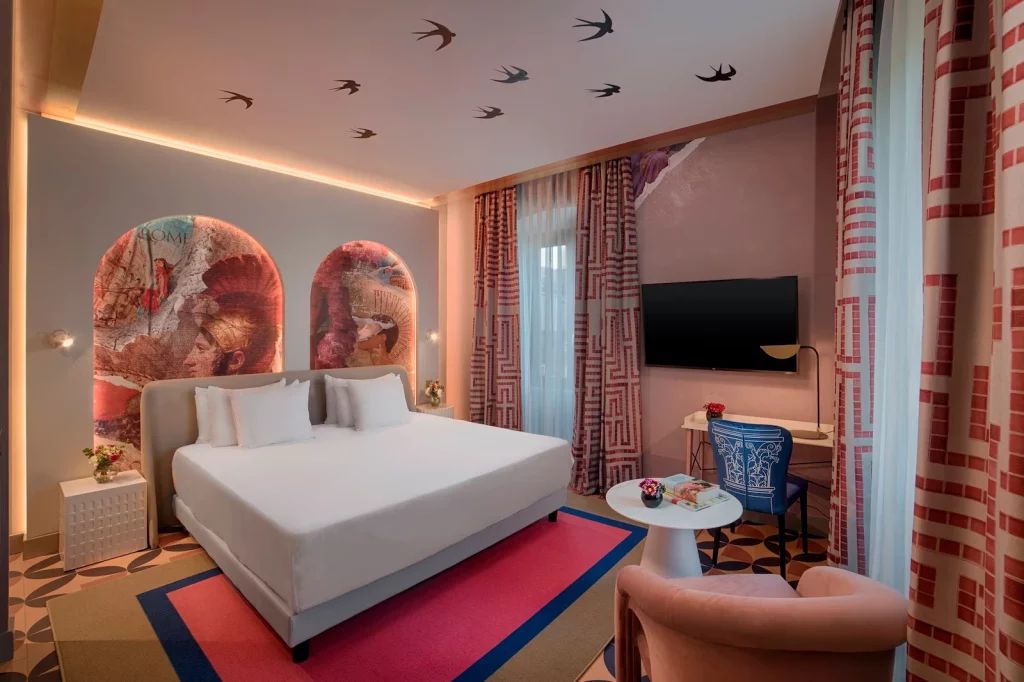
nhow Rome hotel, whose art and experiential design was created entirely by David Zuker, is an iconic example of what spatial storytelling can achieve when it transforms traditional branding into a narrative with real meaning. A journey through the historical eras of the city of Rome is the inspiration from which a story full of surprising visual and narrative twists unfolds across every space in the hotel, from the public areas to each individual suite.
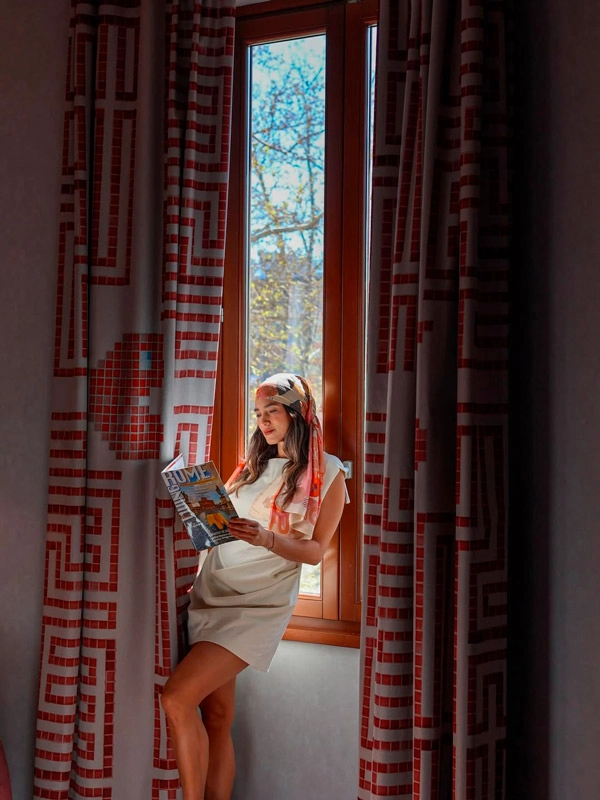
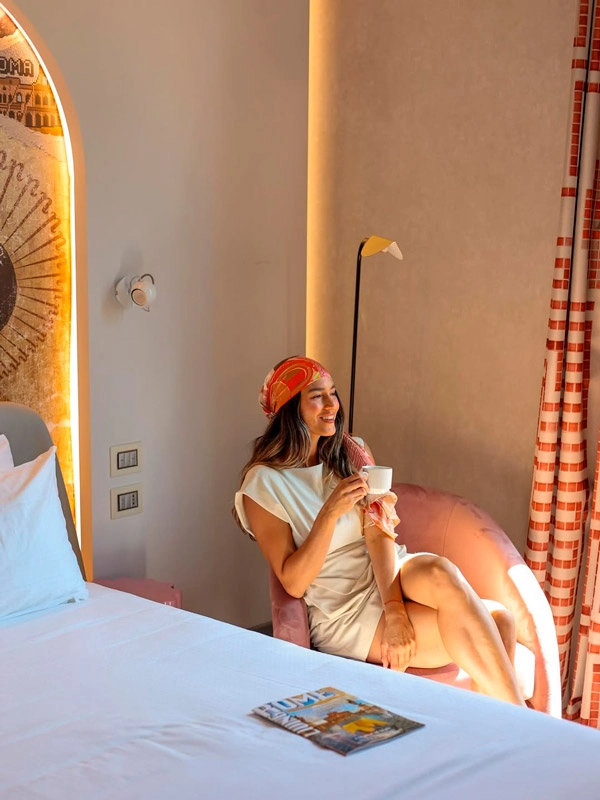
From the exterior statue pointing toward the façade to the backlit lobby ceiling, through to rooms equipped with an immersive experiential design that transforms each space into a retrofuturistic context — with details in curtains, wardrobes and minibars that add further layers to the story — nhow Rome is planned for gradual discovery: the guest moves through its spaces searching, finding and being surprised by each element. The narrative is never announced. It is discovered.